
Insights
The Inventory Black Box No One Owns

Engaged SCM | Warehouse Modernization Series
Inventory does not disappear. It just leaves the system. That is the problem.
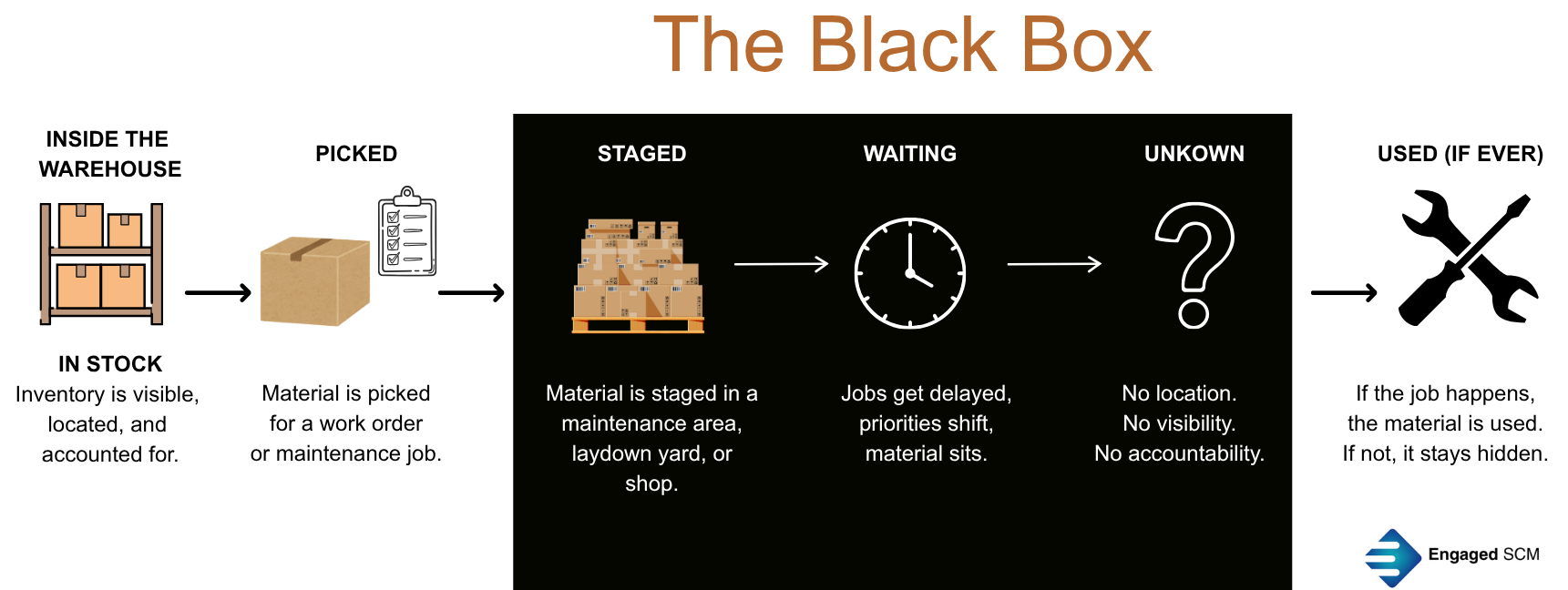
Across asset-heavy operations, the same pattern repeatedly shows up. Material gets picked and it leaves the warehouse. It is issued to a work order or staged for maintenance. Then it goes quiet with no location, no visibility, and no accountability. From that point forward, it lives in a black box.
Most leadership teams do not realize how large that black box has become until someone walks the floor and starts opening crates and pulling apart multi-item pallets. Dust covering the pick ticket from 2 years ago, or the items pushed to the back on a pallet rack that have been lost since last inventory count. The black box is the system, or lack of system.
This Is Not an Edge Case
At one asset-heavy mine site, more than $6M in direct orders sat waiting to be picked up. Some of it had been sitting there since 2023. That represented 13% of total inventory value.
At a large-scale continuous process facility, over $2M in picked material sat on shelves unused and untracked. Roughly 10% of their inventory was tied up with no signal.
Two different industries. Two different operating models. Same problem.
This is not excess stock sitting in racking. This is inventory that already left the warehouse. The purchase cost has been expensed and charged to the business unit. It is off the balance sheet. But the material was never used, which means the business unit absorbed the cost without ever receiving the value. It did not disappear from the financials quietly. It hit the P&L and delivered nothing.
The Moment Visibility Breaks
Inside the warehouse, most teams have control. Locations are defined. Cycle counts are performed. Variances are tracked. Inventory accuracy is measured and reported. There is structure. Then material gets picked, and that is the moment visibility breaks.
Once material moves into a staging area, a laydown yard, a maintenance shop, or a temporary holding space, it often loses its identity. It is no longer tied to a precise location in the system. It is tied to an assumption that it will be used. When it is not, nothing pulls it back into view.
What It Looks Like in Practice
Walk into most maintenance staging areas and you will see it immediately. Pallets with faded tags. Boxes opened and re-taped. Kits built for jobs that never started. Material sitting on shelves that no one wants to touch because no one is sure where it belongs.
Ask how long it has been there, and no one knows for certain. Ask who owns it, and the answer usually starts bouncing between departments. Ask whether it is still needed, and the room goes quiet. One staging area turns into multiple buildings. Across an operation, the dollars add up fast.
How the Black Box Gets Built
The issue does not come from one bad decision. It is the result of normal behavior across three groups. Maintenance planners want to protect uptime. They stage material early to make sure jobs are not delayed. If the parts are there, the job can proceed.
Buyers respond to demand signals. If a work order calls for material, they ensure it is available. If inventory shows as consumed, they replenish it.
Warehouse teams execute the work. They pick, stage, and move material based on the request. Their job is to support operations.
Each group is doing the right thing in isolation. The problem is what happens between them.
The Ownership Gap
Once material is picked, accountability starts to fade. Maintenance assumes the warehouse still has visibility. The warehouse assumes maintenance now owns the material. Procurement trusts the system inventory position and keeps replenishing against it. Meanwhile, no one is actively responsible for tracking what happens next. That is where the black box begins.
The material sits while operations move on. Jobs get rescheduled. Shutdown schedule shift. Crews get reassigned. Equipment comes offline unexpectedly and weeks turn into months. Eventually, the original demand no longer reflects reality, but the inventory stays exactly where it was left.

Why It Stays Hidden
Most inventory reporting is built around the warehouse itself. Accuracy metrics focus on inventory sitting in defined locations. Cycle counts validate what is stored in racking. Reconciliation processes compare system quantities to physical counts inside controlled areas. On paper, everything can look accurate while millions of dollars in material sit outside of that visibility.
Staged inventory rarely appears clearly in standard reporting. It often gets grouped into broad categories or excluded from accuracy measures entirely. Once material leaves a formal warehouse location, the visibility starts to weaken.
If leadership is not specifically asking about picked but unconsumed material, the issue stays buried in the operation.
The False Confidence Problem
That creates a dangerous level of false confidence across the business. The KPIs look healthy. Inventory accuracy appears strong. Service levels remain stable. From a leadership perspective, the operation seems under control.
Meanwhile, a meaningful portion of inventory has effectively disappeared from the system without actually being consumed. Buyers continue replenishing against demand signals that are no longer accurate. Planners assume material availability that does not exist where they expect it to. Finance sees inventory values that do not reflect usable stock.
Decisions get made based on distorted information, and the longer it continues, the harder it becomes to trust the data behind the operation.
The Financial Impact
This is not a small process issue. When 10% to 13% of inventory value is sitting idle in staging areas, maintenance shops, or laydown yards, it becomes a working capital problem. That cash has already been spent, but it is no longer supporting operations or creating value.
The secondary costs build quickly. Duplicate purchases happen because the system still shows demand. Expedited orders get placed to cover shortages that may not actually exist. Valuable storage space gets consumed by material that should have been returned months earlier.
Eventually, write-offs follow when material becomes obsolete, damaged, or impossible to reconcile. By that point, the opportunity to recover value is largely gone.
Why Systems Do Not Fix This
Most organizations respond by looking at technology first. They add new statuses, adjust workflows, build reports, or invest in system upgrades. Those changes can improve visibility, but they do not solve the core problem on their own.
The issue is not system capability. The issue is operational behavior and accountability. If material continues getting staged too early without discipline, it will continue sitting untouched. If no one owns the process for returning unused material, it will remain outside the system indefinitely.
Technology supports discipline. It does not replace it. If teams do not trust the process, they will continue creating workarounds regardless of how advanced the system becomes.
Getting Visibility Back
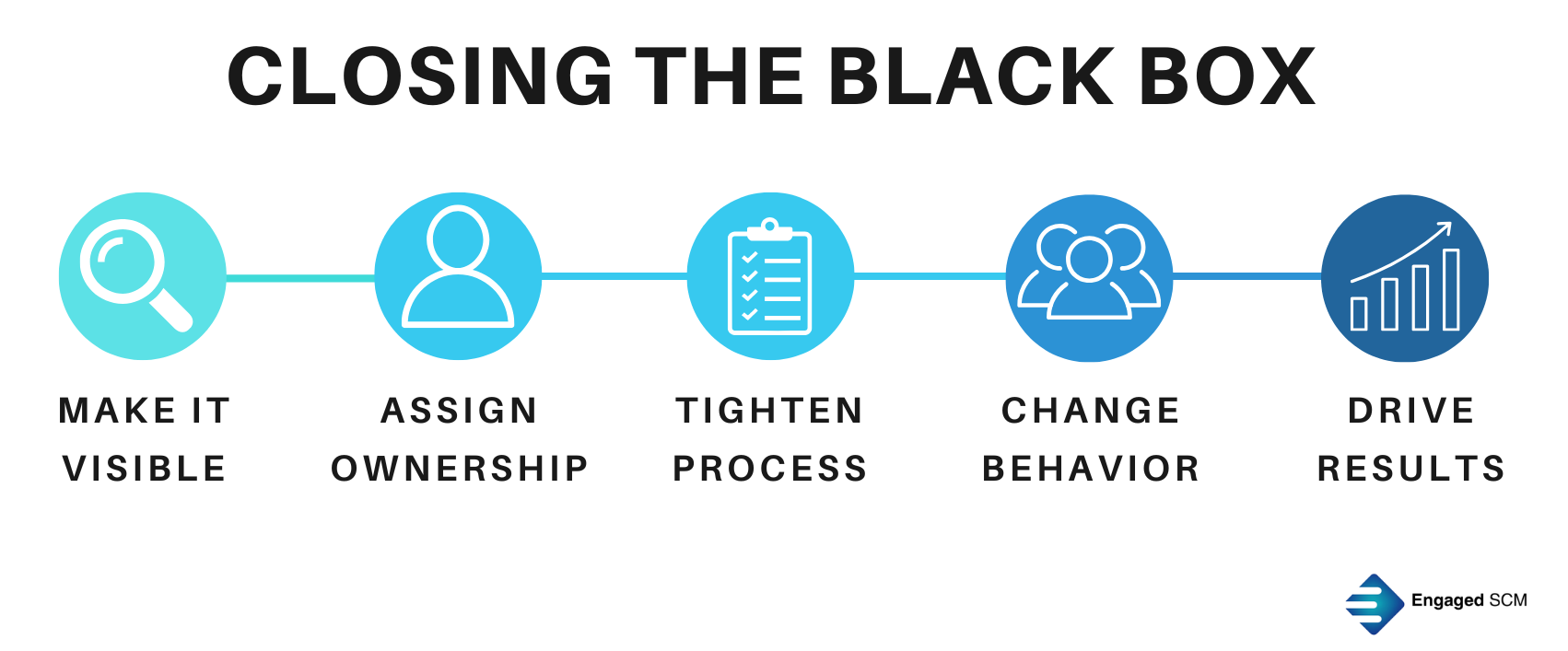
Fixing this issue starts with visibility. Organizations need a clear view of every item that has been picked but not consumed. Not a high-level summary buried in reporting. A detailed, item-level view with aging, dollar value, and clear ownership attached to it.
That information needs to sit in front of the people who can act on it. It should be reviewed consistently, challenged regularly, and tied directly to operational accountability.
Once the inventory becomes visible again, the real work begins.
Defining Ownership
Ownership needs to be clearly defined across the operation. Maintenance owns the material they request. If a job gets canceled, delayed, or rescoped, the material comes back into inventory or gets reassigned appropriately. If a staged kit is no longer needed, it does not sit untouched for months waiting for someone to notice it.
The warehouse owns physical control. Every item needs a defined location, even if it is temporary location for direct orders. Material cannot sit in undefined staging areas where visibility disappears the moment it leaves racking.
Supply chain owns the integrity of the demand signal. If material is not being consumed, replenishment activity should be challenged before additional inventory gets purchased. This alignment does not happen naturally. It needs to be defined, communicated, and reinforced operationally.
Tightening the Process
Once ownership is established, the process itself needs stronger controls. Material should be picked as close to execution as operationally possible. Long staging windows create risk because priorities change faster than most organizations realize.
Aging thresholds should trigger immediate review. If material sits untouched beyond a defined period, someone should be accountable for determining whether it is still required. If it is not, it gets returned. If it is still needed, the work plan should clearly support why it remains staged.
These are not complicated controls. The challenge is maintaining consistency over time.
Changing Behavior on the Floor
This is where most organizations struggle. The process gets documented. Reports get built. Expectations get communicated. Then the behavior stays exactly the same.
Material still gets picked early. Staging areas continue filling up. Returns happen inconsistently. Inventory slowly disappears back into the black box.
This is usually not a training problem. It is a trust problem. Maintenance teams stage material early because they have experienced shortages before. They protect themselves from downtime by physically securing inventory ahead of the work.
Until operational reliability improves, those behaviors will continue. Teams need confidence that the right material will be available at the right time before they stop building their own buffers into the process.
What Happens When It Works
When organizations address this properly, the results show up quickly. Aged staged inventory gets identified and cleared. Material flows back into the system. Inventory accuracy improves because the system begins reflecting operational reality again.
Buyers regain confidence in demand signals. Maintenance planners make cleaner decisions around staging and execution. Warehouse teams regain control over physical inventory movement and storage.
Most importantly, working capital improves without reducing operational readiness or service levels.

Why This Matters More Than It Seems
Too many organizations treat this as a cleanup exercise. They launch a one-time initiative to clear out old material and assume the problem has been solved.
That approach misses the real issue. The black box will rebuild itself if the underlying operational behavior does not change. This is not about cleaning up the past. It is about creating long-term control over inventory movement and accountability.
In asset-heavy operations, inventory is not just a balance sheet number. It protects uptime. It supports maintenance execution. It keeps operations moving. When visibility around that inventory breaks down, operational risk increases with it.
The Leadership Role
This issue cannot be solved at the supervisor level alone. It requires alignment between operations, maintenance, warehouse leadership, procurement, and finance. Without that alignment, ownership gaps remain and the process breaks down again.
Leadership teams need to ask direct operational questions. How much material has been picked but not consumed? How long has it been sitting? Who owns it today? What triggers a return process? What controls exist around aging staged inventory?
If those answers are unclear, the issue already exists inside the operation whether it has been quantified yet or not.
The Bottom Line
Inventory does not disappear after it gets picked. It simply leaves the system’s visibility.
When no one owns what happens next, the result is a growing black box that ties up millions in working capital, distorts inventory signals, and weakens operational decision-making across the business.
The fix is straightforward, but it requires discipline. Make the inventory visible. Define ownership clearly. Tighten operational controls. Sustain the behavior long enough for the process to hold.
That is how the black box starts to shrink.
About Engaged SCM
Engaged SCM works with operations leaders to build the analytical and organizational capabilities needed to get full value from warehouse modernization. If you are preparing to invest in new systems, or trying to get more from the ones already in place, we welcome the conversation.
About the Author
Brent Willett is Founding Principal of Engaged SCM Inc., a supply chain advisory firm that helps asset-heavy industrial organizations make better operational and technology decisions, then shows up to deliver them.
Brent is a Chartered Professional Accountant with senior advisory experience at Deloitte and EY. He is the former CEO of Supply Chain Canada (Alberta Institute) and currently serves as a strategic advisor to the Alberta Logistics Centre of Excellence.
Connect with Brent on LinkedIn.
Is Your Bottom Line Paying for a Broken Process?
Most asset-heavy operations have hidden inefficiencies that technology alone will not fix. We find them, build the plan, and stay engaged until the results are real.
